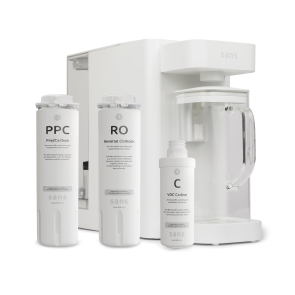
If You’re Looking for the Most Pure Water at Home, Start Here.
Reverse osmosis is the gold standard of home water filtration, full stop. It’s the same molecular-level filtration used in commercial water treatment, just shrunk down to fit on a countertop. “RO” purifiers are the ultimate gold standard, but not all brands are made equally.
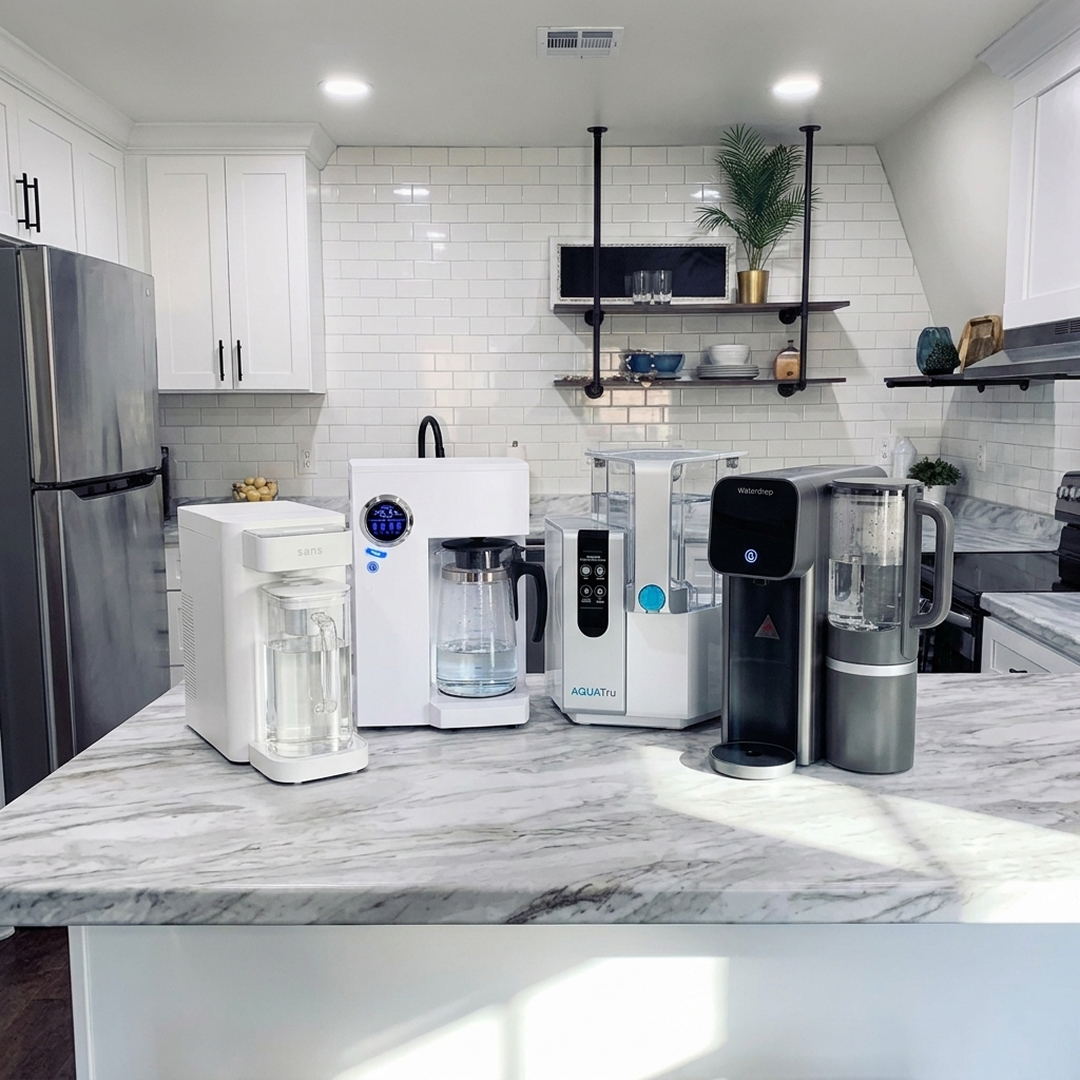
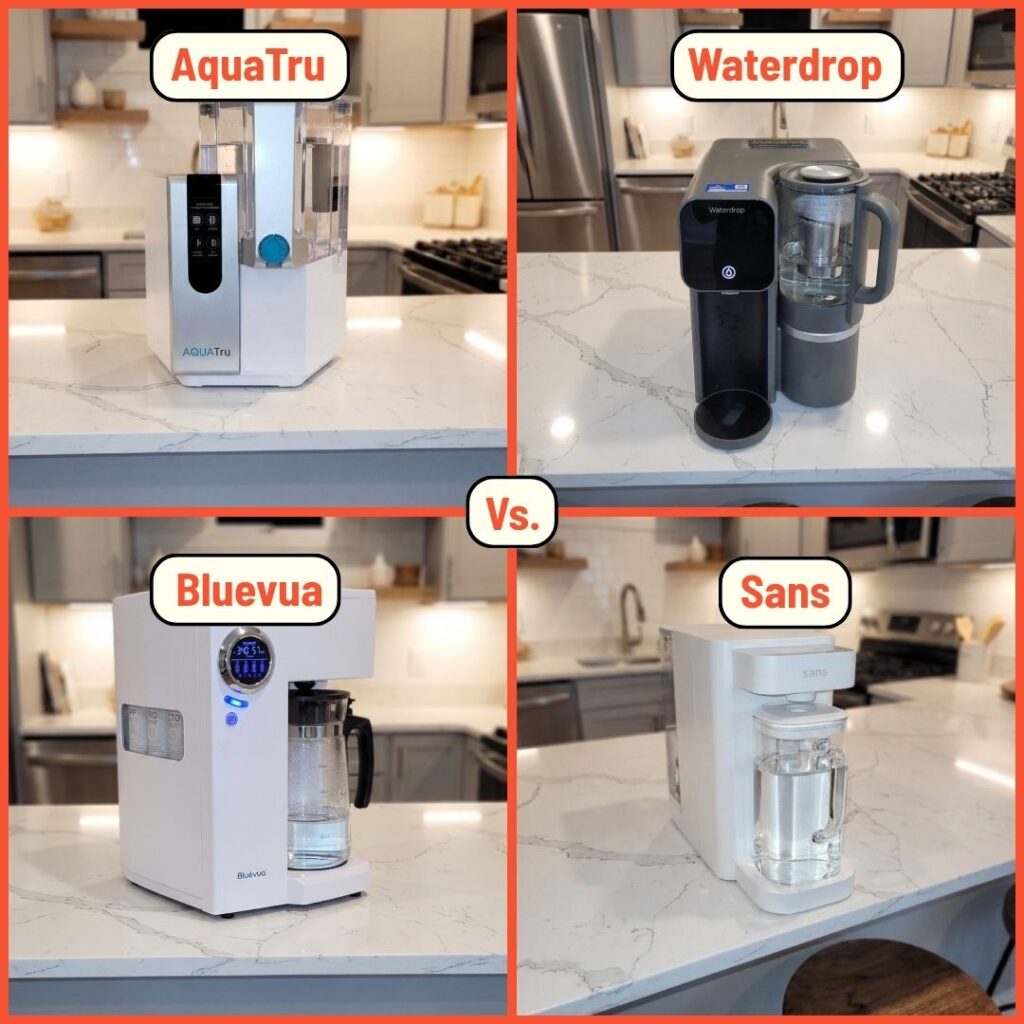
We decided to compare four of the internet’s most-hyped reverse osmosis purifiers (Sans, AquaTru Classic, Bluevua ROPOT, and Waterdrop M6H) against the five things that separate a “fine” purifier from a great one.
One of them checked every box. The other three not so much.
Why RO, and Why These Four?
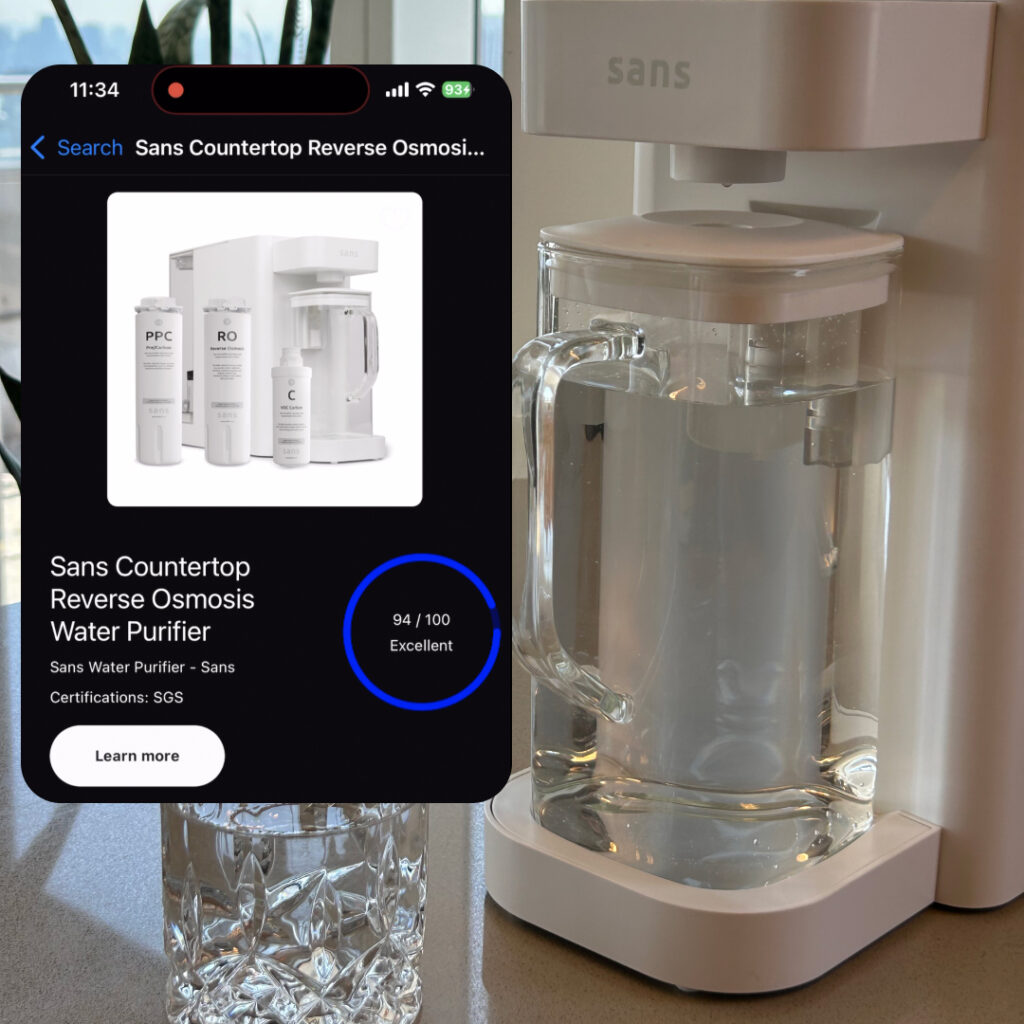
While RO is the gold standard, the real question is what each brand builds around the filtration. Sans came with the most hype, from TikTok to wellness blogs to the Oasis water app, where it holds a 94/100 rating and a reputation for selling out on backorder.
AquaTru, Bluevua, and Waterdrop each make a legitimate case for themselves too, so we used their flagship countertop models in our evaluation. The comparison was broken down into five categories that separate a purifier that rests on its reverse osmosis laurels from one built to thrive on your counter long-term:
- Lab Testing
- Water Quality Features
- “Nice to Have” Features
- Layers of Filtration
- Product Warranty
It’s probably worth starting with price. The AquaTru Classic costs $475 (at their base model). The Bluevua costs $454. The Waterdrop M6H costs $419. And finally, the Sans Water Purifier costs $499.99 (although it’s currently on sale for just $374.99). So yes, each one is definitely an investment.
But we attempted to find out which investment is actually worth it. Here’s how the four of them stacked up.
1. Lab Testing
Every brand on this list claims their filter removes “up to 99% of contaminants.” The real question is who’s checking.
AquaTru points to NSF/ANSI certification across five standards. Waterdrop is certified to 58 and 372. Bluevua claims partial certification. All reasonable, but a certification badge tells buyers a machine passed, not exactly what it removed or by how much.
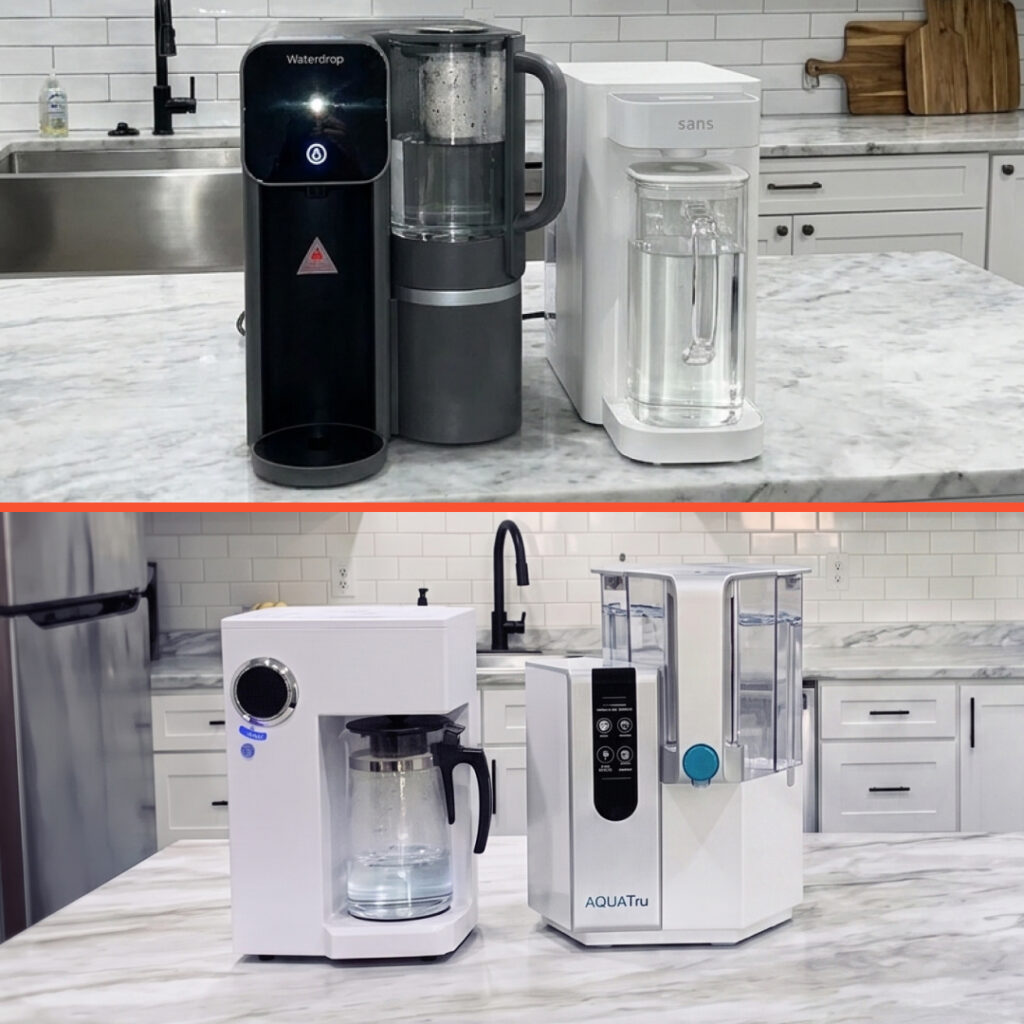
Sans is the only one of the four that publishes its full third-party lab report, run by SGS, an internationally accredited independent lab. And the numbers are very solid:
- Fluoride removed at better than 99.9%
- PFOA at better than 98.8%
- Lead at better than 99.3%
- Microplastics at 99.9%
- Arsenic at better than 97.2%
If you’re asking us, the winner in this category is Sans based on pure transparency.
2. Water Quality Features
AquaTru and Bluevua don’t offer any kind of live water quality readout. Waterdrop only builds a TDS sensor into its higher-end models, not the M6H. Sans, meanwhile, ships with SmartPure™, a built-in sensor that reads Total Dissolved Solids in real time, right on the front of the machine.
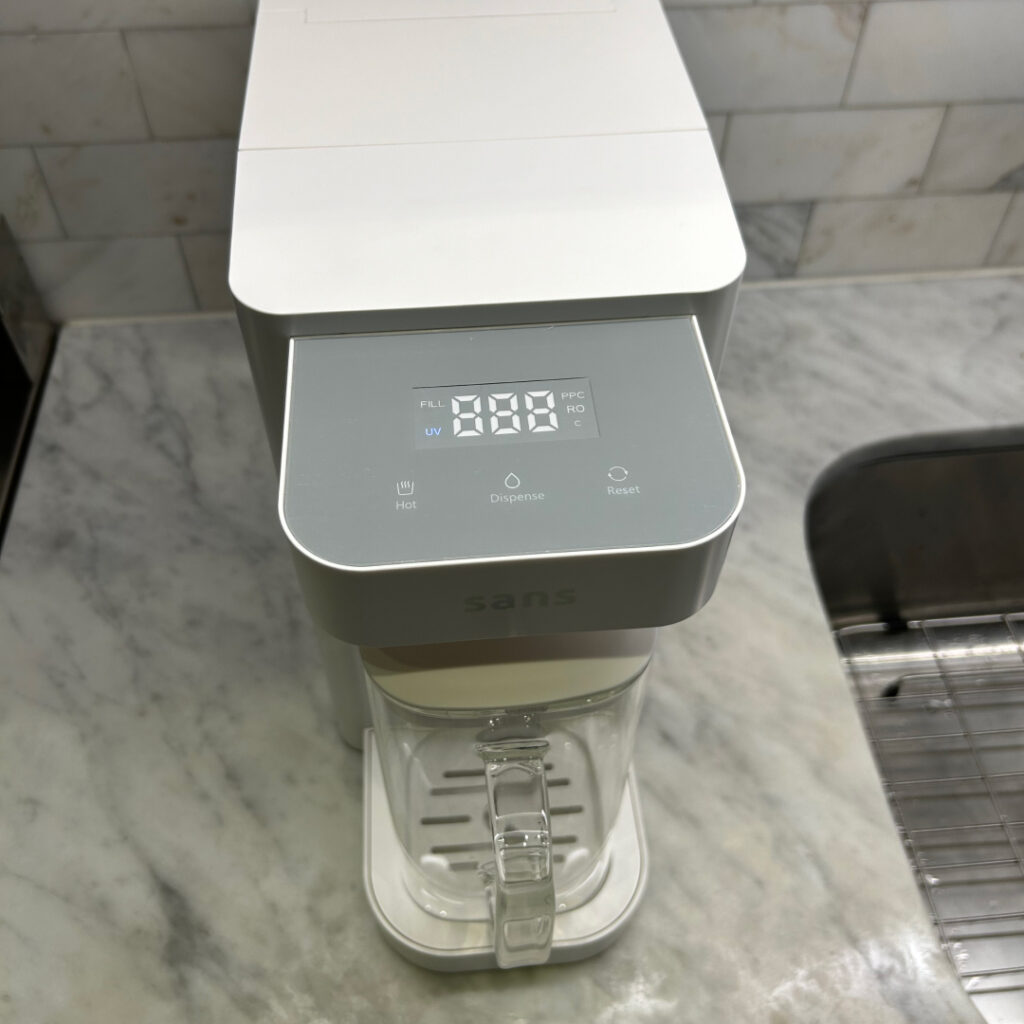
It’s actually a pretty awesome way of showing Sans owners their water quality as they’re pouring themselves a glass, instead of just assuming it’s purified.
For this reason, we’ll take Sans again in this category.
3. “Nice to Have” Features
Purification specs get all the attention, but day-to-day livability is what determines whether a purifier stays on the counter or ends up back in its box. This is where the gap between these four machines gets hardest to ignore.
If you’re asking us, the standout here is Sans’ auto-fill pitcher. It refills itself while docked, then lifts right off and goes straight to the fridge or the table. AquaTru’s Classic runs on a push-button tank with a plastic pitcher (glass is reserved for its pricier Carafe model). Bluevua and Waterdrop are both manual fill, and Waterdrop only offers real-time water monitoring on select higher-tier configurations.
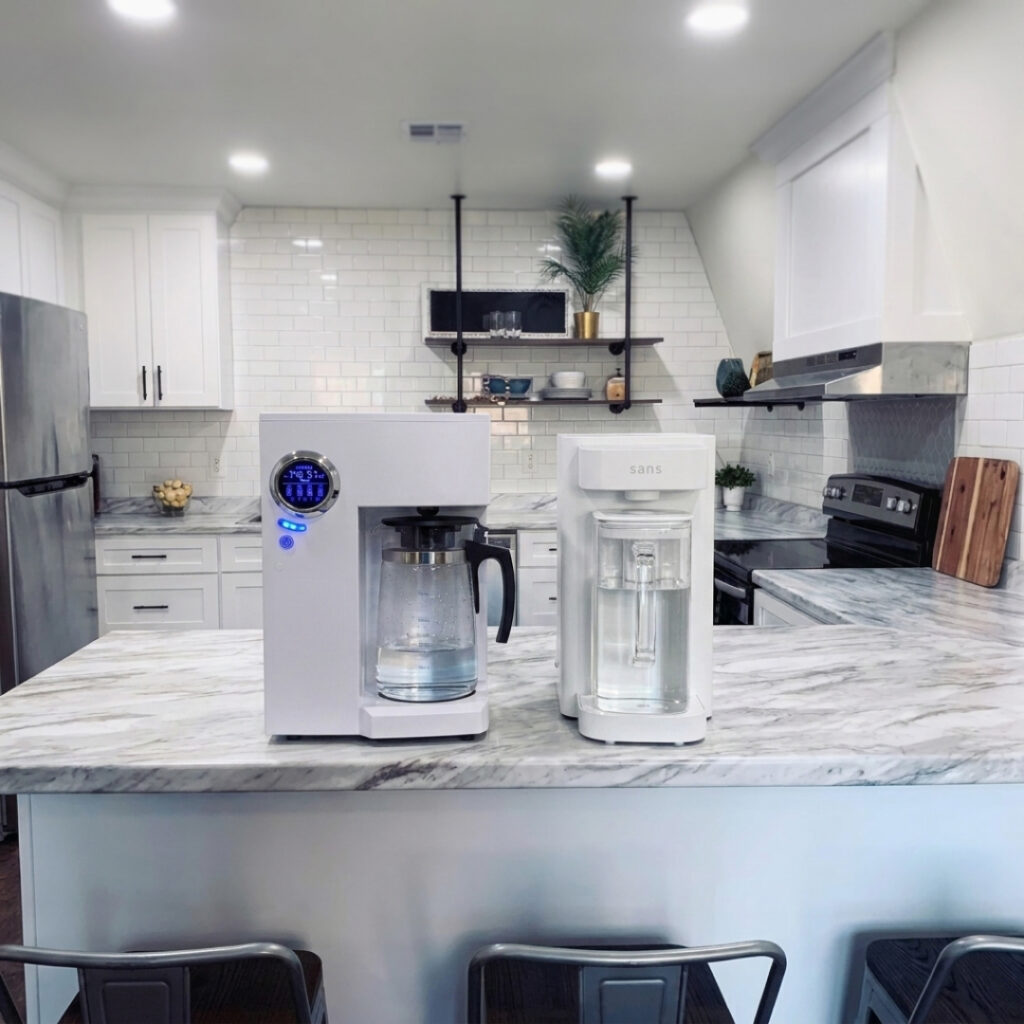
AquaTru does have a feature that can send maintenance alerts through an app, which is pretty cool. But once we saw Sans had an instant-hot feature to dispense hot water directly into a mug of tea or instant coffee… it was another wrap.
We’re picking Sans for the auto-fill and the instant-hot features.
4. Layers of Filtration
More filtration stages don’t automatically mean cleaner water… what matters is what each layer does, and whether the last one is there at all.
All four machines use reverse osmosis to strip out dissolved solids, heavy metals, and microplastics. Bluevua (6-stage) and Waterdrop (7-stage) technically out-count Sans and AquaTru’s 4-stage systems, but most of that gap comes down to how sediment and carbon pre-filtering get split up and counted, not deeper purification.
A critical stage is actually the last one, UV-C, which sterilizes bacteria and viruses that can slip past the membrane. AquaTru’s Classic skips it entirely. Bluevua includes it standard. Waterdrop only includes it on select M6H configurations.
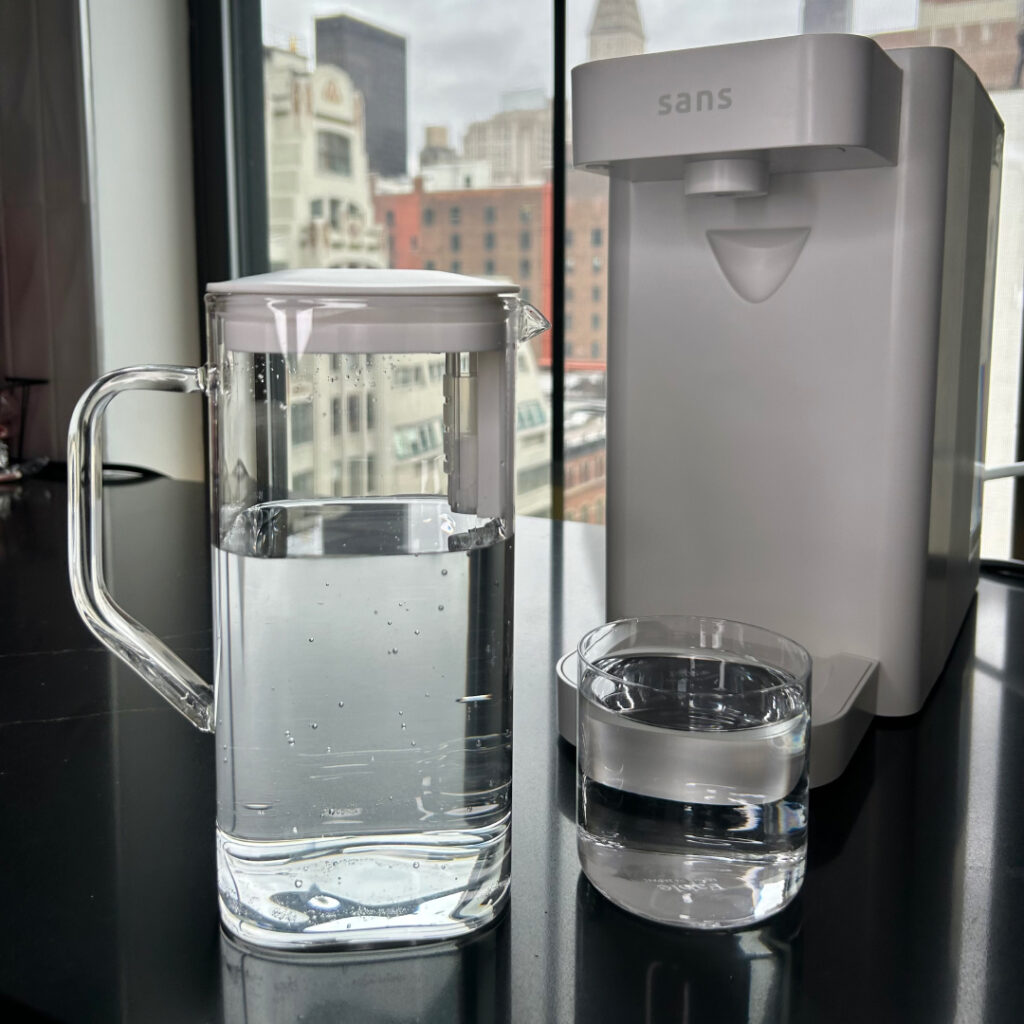
Sans includes UV-C standard on every unit, as the final layer after sediment, carbon, reverse osmosis, and VOC filtration. This category could go either way, but we like the consistency of Sans’ UV-C.
5. The Warranty That Actually Backs the Machine
A purifier is only as good as the company standing behind it. AquaTru, Bluevua, and Waterdrop all offer the industry-standard one-year warranty (AquaTru will sell an extended one for an extra $49.95, if asked).
Sans backs its purifier with a 3-year warranty, plus a 30-day risk-free trial and free shipping both ways if it’s not the right fit. That’s a pretty substantial perk package.
The Scorecard
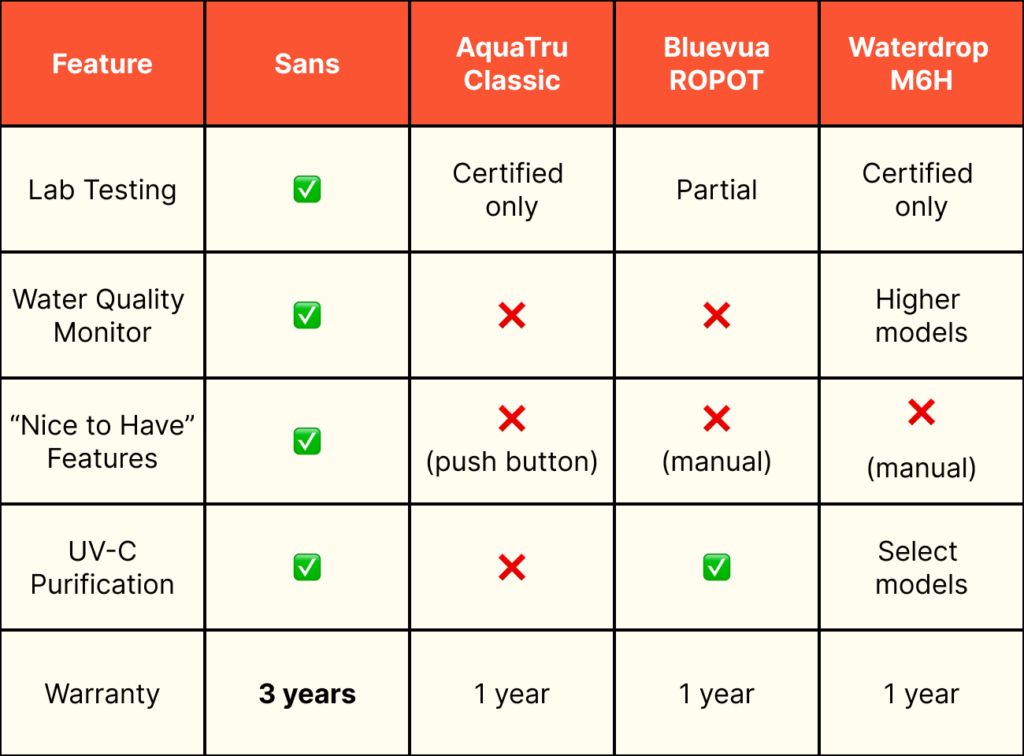
Of These 4 Reverse Osmosis Purifiers, We Know Which One We’ll Be Choosing.
Four purifiers. Five features that actually matter once the “it’s RO!” marketing wears off. The way we see it, Sans took the cake on basically all five features.
Anyone shopping this category should ask every brand the same question: not “is it reverse osmosis,” but “what did you actually build around it?” For three of these machines, the answer was some version of “not much more.” For Sans, it was everything on this list.
Want to taste the power of our favorite reverse osmosis purifier? Try Sans risk-free for 30 days.